
Who makes up Oregon’s Nursing Workforce?
Statewide data provides an important baseline for understanding who currently makes up Oregon’s nursing workforce. Several communities remain underrepresented among registered nurses when compared with their share of Oregon’s population, most notably Hispanic/Latino Oregonians.
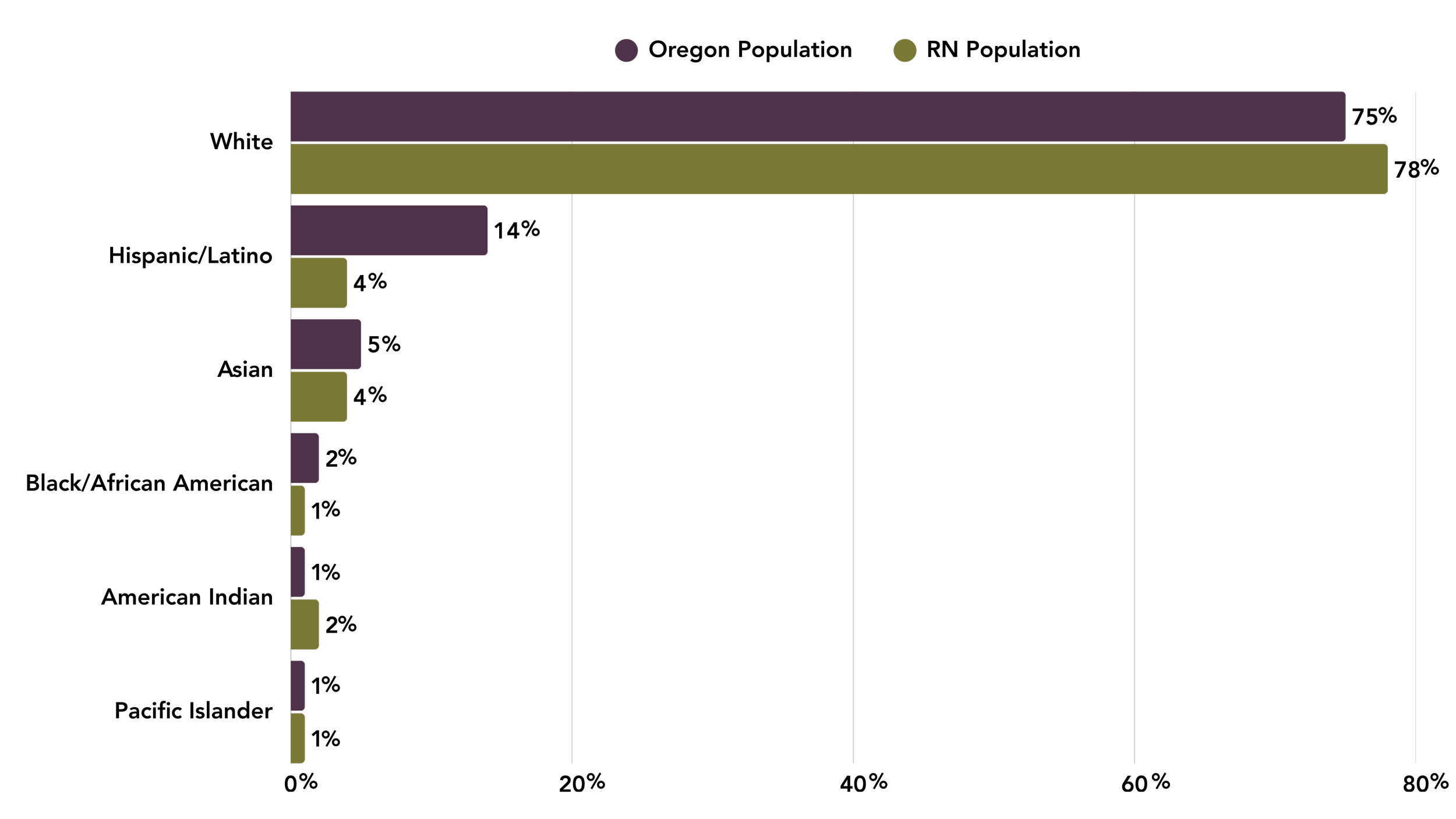
Even when percentage gaps appear small on paper, they have meaningful impacts on access, trust, and culturally responsive care, especially in rural and underserved areas.
14% vs 4%
14% vs 4%
Hispanic/Latino Oregonians make up 14% of the state’s population but only 4% of Oregon’s registered nurse workforce.
Hispanic/Latino Oregonians make up 14% of the state’s population but only 4% of Oregon’s registered nurse workforce.
Why Representation Matters
A nursing workforce that reflects the communities it serves can support stronger communication, collaboration, and community engagement, particularly when paired with culturally responsive training and leadership.
For many aspiring nurses, the path into the profession is shaped by more than academic ability. Financial barriers, limited mentorship, and a lack of visible role models can make nursing education difficult to access, especially for students from underrepresented communities.
“I never thought I would face the challenge of houselessness, never thought I would spend nights sleeping in my truck with my children, and never thought I would have to “live” in a hotel…until I did. With my whole world feeling upended, I wasn’t sure how I was going to begin nursing school, let alone finish it.”
-Candace, Cohort 2
Oregon Needs More Nurses Now
40%
of nurses plan to leave the profession by 2029
Sourced from National Council of State Boards of Nursing (NCSBN)
Be Part of their Journey
-
![]()
Equity in Care
A diverse nursing workforce ensures that all Oregonians, especially underserved groups, receive equitable and culturally aligned responsive care.
-
![]()
Understanding & Connection
Nurses who reflect the communities they serve help patients feel seen, heard, and respected.
-
![]()
Better Health Outcomes
Research shows improved trust, communication, and long-term outcomes when patients receive care from culturally aligned providers.



Ready To Be Part of the Change?
-
Learn More About the Scholarship Process
-
Donate to Support the Scholarship